7/7 LESSONS REVISITED

Whether lessons have been learned and actioned.

I thought this week with the 10th anniversary of 7/7 I would look back through one of the reports on the incident by the London Assembly (Report of the 7th July Review Committee) and highlight in this bulletin some of the learning points from the incident. If we can learn from incidents and improve our response, then something good has come out of a terrible incident. In reading the report one of the things that struck me was a number of communication failures during the response. This should not surprise us as almost every incident report or exercise report highlights failures in communication as one of their key learning points. There were three main failures in communications; loss of communications to those responding underground, overload of the mobile phone system and the failure of the ambulance communications system. The difficulty of communicating underground was identified as a significant issue in the report into the Kings Cross fire in 1988. During 7/7 the report noted that the Metropolitan Police Commissioner, Sir Ian Blair, told us that he regarded the inability of the emergency services to communicate underground as ‘a significant problem for London’. The lessons from the last incident in this aspect of communications had not been learned. Do you go back through your own incident reports and those of other organisations, which are relevant, and check that the lessons identified have been learned or actioned in your organisation? All of our mobile plans are highly dependent I suspect on mobile phones working. Much of the communications failure during the response to 7/7 was due to the emergency service and other responders having a high reliance on mobile phones and the system not working in certain areas. This was again identified in the report as a foreseeable problem. The same happened during 9/11 and actually happens in many areas each New Year’s Eve. The failure of the mobile system was due to the large number of calls overloading the system which the report details: “London’s telephone networks experienced unprecedented volumes of traffic. Vodafone experienced a 250 per cent increase in the volume of calls and a doubling of the volume of text messages. There were twice as many calls on the BT network as would normally be the case on a Thursday morning. Cable & Wireless handled ten times as many calls as usual to the Vodafone and O2 networks – 300,000 calls were placed every 15 minutes, compared to 30,000 on a normal working day. O2 would normally expect to handle 7 million calls per day. On 7 July, 11 million calls were connected – 60 per cent more than usual – and this does not include unsuccessful calls”. Have you got plan of how to deal with an incident without mobiles, especially at the scene of the incidents, and how staff caught up in the incident will inform you that they are safe? Lastly on communications, although it didn’t affect the overall response, there was a major breakdown of The Ambulance Service communications. This lead to “repeated instances of London Ambulance Service officers requesting more ambulances, supplies and equipment and receiving no response”. Failure of communication within the ambulance service was due to issues with their radios and failure of the mobile phone system. Could your response be majorly impacted by failure of communications and are your existing communications fit for purpose, tested and staff trained in their use? One of the themes I have been promoting in my bulletins is ‘do our plans have sufficient emphasis on looking after people during an incident’. I was disheartened to see the following within the report: “The response on 7 July demonstrated that there is a lack of consideration of the individuals caught up in major or catastrophic incidents. Procedures tend to focus too much on incidents, rather than on individuals, and on processes rather than people. Emergency plans tend to cater for the needs of the emergency and other responding services, rather than explicitly addressing the needs and priorities of the people involved”. I am guilty of this as well, but I think we should look again at our plans and see if they take account the need to look after our people and those affected by the incident? My last point is the importance of leadership at the scene of an incident and in someone taking command. The following is an extract from the section on communications from people in authority within the first 15 minutes: ‘Michael, survivor of the Aldgate explosion said ‘Information is essential when in shock people freeze and can’t make rational decisions, people need to know what to do, even if it is to remain on the train and wait’. Nobody knew what to do immediately after the bombs had gone off. They were in an unfamiliar environment and were unsure whether it was safer to leave the train or to remain where they were. A number of survivors talked about the relief of having someone in authority, the train driver, tell them to what to do and “walk down the track to Russell Square”. This highlights to me the importance of training for staff likely to be at the scene of an incident so that they can make quick decisions and be the voice of authority in an incident.

Charlie Maclean-Bristol

Director of Training

Business Continuity Training Ltd

GOODWILL

You have to, in your own life, get people to want to work with you and want to help you. The organizational chart, in my opinion, means very little. You need your bosses’ goodwill, and you need the goodwill of your subordinates even more.

Find and Develop Your Passions

A passion is something for which you have boundless enthusiasm. Do you know what your passions are?

People who love what they do, know their passions and do not turn into someone else when they go to work. They have integrity, and a strong sense of what their talents are. They build their careers on a foundation of self-knowledge and are devoted to developing their strengths.

People tend to spend too much energy on overcoming a weakness, instead of focusing on natural abilities and preferences. This wasted effort often comes from conditioning in schools and certain corporate settings. It is often unproductive to depend on an institution or employer for career development.  Their motivations are not simply to help you in finding your true calling and may even run counter to your best interests. For example, an employer may want to keep you at your assigned tasks that you do well, even if you are ready to move on or up and learn something new.

Passions are preferences that inspire you in life and at work. For our purpose and discussion, there are four types of passions or work strengths:

  1. Interests are those ideas or topics that stimulate you. As you identify those topics, consider things that you know about as well as those you would like to learn more about. Long-term career satisfaction is dependent upon how well and to what extent an area of interest can hold your attention. Interests include things like technology, social justice, and art.
  2. Talents are skills that give you energy when you engage in them. Talents are skills but not all skills are talents. I define talents as those skills that you long for when you are not engaging in them. One way to discern the difference is to consider this: if you had a choice, you would not delegate a talent to someone else. Talents include things like using your hands to fix things, writing, speaking and leading.
  3. Style defines how you are at work when you are being your most authentic. How you would behave at work if you could really express yourself freely might offer clues to your soul work. Your personal style includes those attributes that you bring to an organization or industry, beyond your talents or skills. Style includes things like a sense of humor, empathy and vision.
  4. Environment defines what you need at your workplace. Understanding what you need at work will help you find the right cultural fit. Even if all the other factors are in place, the wrong environment can make great soul work miserable. Think about the ideal environmental qualities that would make up your perfect work culture, whether you plan to create it yourself, or find it at an organization. Environmental attributes include a style of design, access to nature and levels of competitiveness.

All four aspects are vital in creating dream work that will balance interest, enjoyment, and challenge. To create a more authentic life you must first know and develop your passions. For many people, this is easier said than done. Many have forgotten what their passions are. Some have outgrown old passions and need to find new ones and others know what they are passionate about but instead of incorporating these things into their life and work, are disconnected from them and do not see a way back. Sometimes an unexpected event forces you to reevaluate what direction you want to take in your career.

Let today be a time of reflection and readjustment around your own talents and growth. Spend the day thinking about your passion in life.

Find your passion now.

Adapted from Laurel Donnellan (brightlivelihoods)

The Challenge of Emergency Evacuation from High-Rise Buildings (and Even Ones That Are Not So High)

Headlines over the 150-year history of tall buildings provide us with evidence of what can go wrong and the likely costs and consequences of such events.  Many of the challenges are the same as those in any multi-story building, but the higher the building, the more complex the problems become, with some super-tall skyscrapers requiring two or three hours to get everyone out.  Even if you are not evacuating people from a skyscraper, the considerations that follow will give you useful information for reviewing your plans for evacuating employees and visitors from any multi-story building.

Under normal circumstances and with a good evacuation plan, it should only take a few minutes to evacuate one of these basic 5 or 6-story buildings. Thus, when we talk about skyscrapers or high-rise buildings, we mean buildings over 10 stories, their height made possible by the invention of the elevator.  The majority of the people will have reached their destination through the use of elevators, which would probably be out of action in an emergency.

The population density, the volumes of traffic, and the vertical distances in a skyscraper demand a more detailed and focused investigation, planning, and delivery cycle for your evacuation plan.  Challenges such as the safety of disabled employees and visitors are intensified.

Since it is unlikely that you were involved in the design, engineering, and construction of your building, you will need to work with the alternative escape routes and exit points that are present. So your challenge is: “What can you do to reduce the risk of an incident developing into a tragedy?”

Seven Critical Areas of Investigation and Concern

1. Structure.  Do your homework. Investigate every floor and every aspect of the structure of your building and become familiar with all of the details and their intended purpose in relation to emergency evacuation. Do not rely on floor plans alone. Walk every inch of the building yourself and take notes. It helps if you do this with someone familiar with each section of the building and the activities that take place there. That person can help you identify features and oddities and come up with a list of possible threats.

2. Routes.  While you are inspecting and taking notes, check the marked exit routes and exit points. Pay particular attention to the likelihood of escape routes being compromised or obstructed and if this might happen on certain days when, for example, hallways could be used temporarily for shipments of boxes. Think through the whole route, walking in the shoes of an evacuee starting out from each of the locations you visit – and then consider additional challenges if evacuation were being done in near darkness, by someone in a wheelchair, by a child, or by a visitor unfamiliar with the building.

3. Volumes.  Estimating the volume of people that will need to escape from any part of the building is a normal part of evacuation planning. However, volume becomes critical in a high-rise environment, since excessive crowding on lower levels will take place as those from upper levels descend, creating “pinch points,” which impede evacuation. Gain a clear understanding of the likely volumes of people who might be in various parts of the building on a normal day and what their special needs might be. In addition, look for regularly scheduled events that would increase the number of people in the vicinity. As you visit and inspect each and every area, build up a picture in your mind of the growing volumes as people make their way downwards and mingle with the rest of the crowd. Ideally, your architecture should allow for escape routes to become wider as they merge to avoid congestion, but, in practice, this is not always the case, especially if you are in an older or reconfigured building. In your evacuation drills you will need to be prepared for “heavy traffic” in the halls.

How long will it take to get everybody out?  For example, if people leave the venue at a rate of one person every 2-4 seconds (allowing for delayed response or special populations), and it takes each person an average of 5 minutes to travel to safety (which may be some distance, and exposed to hazards or obstacles along the way), and you have a crowd of 1,000 people, you could estimate a minimum of approximately 55 minutes to completely evacuate the Venue.

4. Warning. You should have a system of warnings and alerts in place to cover different emergency situations. For a dangerous occurrence such as a shooter on the premises, the warning might be in the form of text messages to managers and others responsible for emergency actions. People would be instructed where and how to take shelter until local authorities give instructions to go back to work or evacuate the premises. The traditional alarm would mean that emergency evacuation procedures are being officially invoked for an emergency, a planned test, or a planned drill and that everyone should follow the instructions of the marshals to escape the premises. The alarm should never be used for a “surprise test,” since its use in anything other than a real evacuation lessens its value. When the alarm is used too frequently, you run the risk that people will stay where they are rather than evacuating – and once they realize that the threat is real, it may be too late for them to get out.

5. Leading.  Your growing crowds will need to be led, guided, or marshaled as they make their way through the confusion towards safety. In a high-rise building, you will need more volunteer marshals and a regular training program based upon floor plans, business groupings, or other common factors which particular groups might share. Marshals will need visible gear and the tools to do their job – clipboards, flashlights, pens, and whistles. A common “uniform” to show the person’s role is the high-visibility vest. However, one company that prided itself on its informal culture simply outfitted all the marshals with brightly colored baseball caps that said “Marshal.”

6. Informing.  During the actual evacuation, keep the key players informed about progress and any further developments or special instructions. Walkie-talkies, cellphones, and mega-phones are all possible. Ideally, this should be a two-way communication system which will work under difficult circumstances throughout the building and its immediate surroundings – and a communication system commonly used by the people involved, since you do not want people learning a seldom used communication system in an emergency.

7. Checking. A very important aspect of evacuation planning, especially in the high-rise scenario, is that of accounting for every individual who was in the building at the start of the incident. A roll call at the final point of assembly is good, but it is a retrospective process that may take place too late. A simple evacuation area checklist would itemize each room, office, rest room, etc. on each floor of the building. Marshals would check each of the areas and check off that it was empty before leaving that floor of the building. In the event of a fire or local emergency, these lists could then be given to fire or law enforcement officers to show that the building is, indeed, empty. Failure to respond to the alarm or other safety communication is a common problem and should be handled with a severe reprimand from the highest level of the company.

Develop and Practice Effective Emergency Procedures

Once you have created the Emergency Evacuation Plan, it is important to test and drill several times a year, although that doesn’t necessarily mean a total evacuation for every test. Some tests may be limited to specific areas, populations, or extent. In between tests, it is important to check all the escape routes and alternate escape routes that are in your plan for each area of the building. Circumstances change regularly, and the back doors to the parking lot you were planning to use may now be blocked by a dumpster or that little-used hallway may have been made into a closet. Continue to check for unexpected problems such as missing signage, blocked passageways, cluttered stairwells, or locked doors. Finally, for your own safety and the safety of everyone on your team, scan the horizon for any new ideas or technologies which you might employ to improve various aspects of the EEP for your high-rise building.

About the Authors

Jim Burtles, KLJ, CMLJ, FBCI, has over 35 years of business continuity consulting experience in 24 countries. He began in-depth research on the subject of emergency evacuation in 2001, after the terrorist attacks on the World Trade Center in New York City.

Kristen Noakes-Fry, MA, is Executive Editor at Rothstein Publishing, a division of Rothstein Associates Inc. Previously, she was a Research Director, Information Security and Risk Group, Gartner, Inc.; Associate Editor, Datapro; and Associate Professor of English, Atlantic Cape College.

A FEW THINGS TO THINK ABOUT

A few things to think about:

• Many of us have hobbies, knowledge, and experiences that can be turned into something useful in the marketplace. Give this some comprehensive thought. You probably have talents that could be further developed to create a career.

• Be proactive. Don’t be passive or fearful. Just taking the next step can get you to better and even great places. Start today.

• Be objective and strive to be your own counselor. Listen to others, but know the final decision is yours and hold yourself responsible. That in itself is empowering.

• If you haven’t given history enough attention, start doing so today. Realize you are in a pivotal time in history, and see it as a challenge as well as an opportunity.

• Each of us has a different route to our destiny and challenges are part of that path.

• Keep your self-image strong and intact by defining yourself in the best way possible—every day, no matter what the circumstances might be.

• Know from the inside out that you have the power to succeed and you will. That’s taking control. Your creative capital might be waiting to be discovered.

PROFILE OF GREG SOLOMON, MD OF McDONALD’s SA

The father of McDonald’s SA, Greg Solomon, is not one to turn down an opportunity. His journey from engineer to managing director is no secret recipe either.

As far as interviews go, meeting up with McDonald’s MD, Greg Solomon, at the launch of the company’s newest and greenest restaurant in Goodwood outside Cape Town, was by far the most colourful and exciting.

It was a beautiful Saturday morning. We were surrounded by so much colour and excitement. The celebrations were in aid of newest and greenest McDonald’s restaurant in Goodwood outside Cape Town. This newly erected steel frame restaurant is the latest creation forming part of many other sustainability measures the company has recently launched.

Before the interview, the Leadership team was privileged to be among the first to sample the latest addition to the McDonald’s stable — the all-new Texan burger.

From the start it becomes clear that the new shop is another grand step towards showcasing the direction of McDonalds in South Africa — and how the ‘green and growing’ vision is driven steadfastly by Solomon — and how his leadership is key to the success that the company has seen in recent times. Solomon confesses; he is all about the brand he represents.

From being a successful civil engineer, looking for a move into the commercial and residential sector, as opposed to the industrial environment, Greg Solomon found himself immersed in an industry that was, at the time, not quite what he was looking for, but it certainly was the right path to his success.

Solomon believes wholeheartedly that with a brand like McDonalds there is lots of room for growth, as he has experienced. “If you’re passionate, you can easily move through the ranks. If I think back, I have to be honest, I would have never thought that I would be here today — running this business and being you know the managing director.”

Solomon joined the McDonald’s group as a project manager in the construction department in 1996. During his tenure in this position he was instrumental in building some of the very first McDonald’s restaurants in South Africa. Almost eight years ago Solomon was approached by the then managing director Terry Reese, who was at the time in the process of localising management. Solomon spent extensive time gaining cross-function exposure, education and experience across the departments. Before assuming the role of managing director, he spent five years learning the science behind the McDonald’s business and gained experience in all the company’s operations.

Solomon is a revered leader and his style is somewhat unique. He displays a quiet confidence and strength when questioned about leadership. He places emphasis on growing new leaders out of his staff. He is quick to refer to the “next Greg Solomon” and together with a robust management system within the company, Solomon is set to grow, develop, inspire and identify any potential candidates who could rise to the role of leadership within the McDonald’s corporation.

He insists that being a leader is an organic role, which he has assumed and developed through inspiration from the people around him.

“When I look back now I think I wanted to lead. When I was younger, I just naturally lead. I did not have a dream to be some mega leader, but all the way through school I played a leadership role in some way or another. My final decision to sacrifice five years of engineering to work in the restaurants was about people and leading people.

“In hindsight I would say I followed my destiny. People inspire me in this business. I often do what I do for the people of this business. I wake up every single day to make somebody else’s dream materialise and somebody else becomes a leader in this business,” he says.

Leadership style

Solomon describes his leadership style as one of coaching and he enjoys a challenging environment surrounded by a diverse team. As head of the organisation, he likes to be challenged directly by his team as he believes that is how growth happens. Regarding his idea of, as he put it, creating an environment of positive discomfort: “This is not a business where I have just found a bunch of ‘Greg’s’ to follow me. That would make for a very boring and fragmented business. I purposely choose people who are going to challenge the system and challenge me. I have created an environment of positive discomfort if you want to put it that way, so that people are empowered.

“Leaders have to make decisions, but that is about 30%, maybe even 20%, of the time. The people who work for me are more clever than me. I am privileged to have recruited them, developed them and coached them. I need to listen to who they are and some of the best ideas come from the people in our franchises,” he says.

Solomon believes that it takes courage to challenge your leader but it takes courage as a leader to give permission to your people to challenge you.

“Good leaders need to make tough decisions and I guess I’ve never been scared to do that—to make those tough decisions when they need to be made,” he says.

Solomon points out, with pride, that although he cannot know the name of all 9 000 of his employees, he maintains an open door policy as does the rest of the McDonald’s company worldwide. He insists on managing his business through his people and has as strong a focus on accountability, as he has on profitability.

Solomon encourages communication with all his employees within the available means and is excited about a new digital platform the company has developed. He describes it as an internal Facebook where anybody in the company can write to or blog whoever they wish to communicate with.

What Solomon does not boast about is that under his leadership, the company has, over the past three years, enjoyed incremental sales growth, increased guest counts, improved customer service and operating income. The fact that he has been elected as the chairperson of the Board of Trustees of McDonald’s South Africa Pension and Provident Fund, is definitely a strong indication of the trust his people have in him.

Sustainability

Under Solomon’s direction, McDonald’s South Africa is now changing the way it builds its restaurants and has embarked on rolling out sustainable restaurants across the country. They have taken specific measures in their building design, making sure that natural light and heat from the sun complement a minimum air-conditioning design, which forms part of a programme that Solomon refers to as ‘Project Green and Growing’.

This visionary programme targets a 20% saving in water consumption, a 20% saving on electricity consumption, 20% saving on costs and 20% saving on construction time, as the brand continues on its strong growth path.

The new restaurants are built using light gauge steel and energy efficient cladding and insulation systems, which mean the restaurants cool down and warm up faster.

“We brought drive-thru to this country. We brought handheld breakfast to this country, we introduced 24/7 shops and now we’ve brought McCafe. McDonald’s need to continue to lead. We have an accountability, we have a responsibility to do that, so this building that we’re sitting in today is no different to probably 40% of the existing McDonald’s restaurants. What makes this fundamentally different is that it is a green McDonald’s. This is a McDonald’s that is striving to give back to the world and back to the planet. We started off with a vision, the green and growing vision,” he says.

Solomon is extremely passionate about his brand and due to his personal interest and passion in his work he strives to listen to his consumers as a consumer himself.

He has his favourites on the menu and is not afraid to share what he thoroughly enjoys on a weekly basis.

“I eat McDonald’s about five times a week, you know. My staple diet is the egg McMuffin. I ’eat my Big Mac once a week. The Big Tasty is my favourite dinner time food, which I have about every second week.

Regarding concerns about fast food being a major contributor to for example heart disease and obesity, Solomon told Leadership the company moving away from being a ‘fast food’ concern, to an establishment that is serving good food fast.

“We are a food business and we need to serve great tasting food that is good for people. At the end of the day we cannot serve people lettuce and tomatoes only—because we are a hamburger company with its heritage in the United States of America, but we are also very proudly a local South African company. Therefore we have to listen to what our local customs want, which explains why our menu has evolved so much.

“The chicken fold over is a local dish, and so is the corn option, the big breakfast and some of the McCafe products, like the carrot cake, is a real South African thing. So we are doing a lot of local meals because we are listening to the consumers.”

Solomon says health is paramount for him and the company and they will continue to pioneer and lead the way in this area.

“ Health extremists have defined health in a certain way, but for us it is about choice and education. The beauty is that we have built our business around a very diverse menu—from fresh juices, fish, chicken, beef and vegetarian meals. Interestingly enough, chicken is about 30% of our total business, fish is a growing part of our business right now. We’ve got different sizes, we’ve got fresh juices,” he says.

Greg Solomon and his team have an exceptionally inspirational outlook to how they run their business. Solomon says there is so much happening in the company and the growth factor is undeniable.

For this reason every employee gets a chance to be nurtured and everybody has the opportunity to gain something. Whether it be an education or simply being a part of a unique and innovative team.

Solomon’s vision and dream as a leader is to impact peoples lives positively, a vision he is fighting for within every decision he makes.

Megan Sell

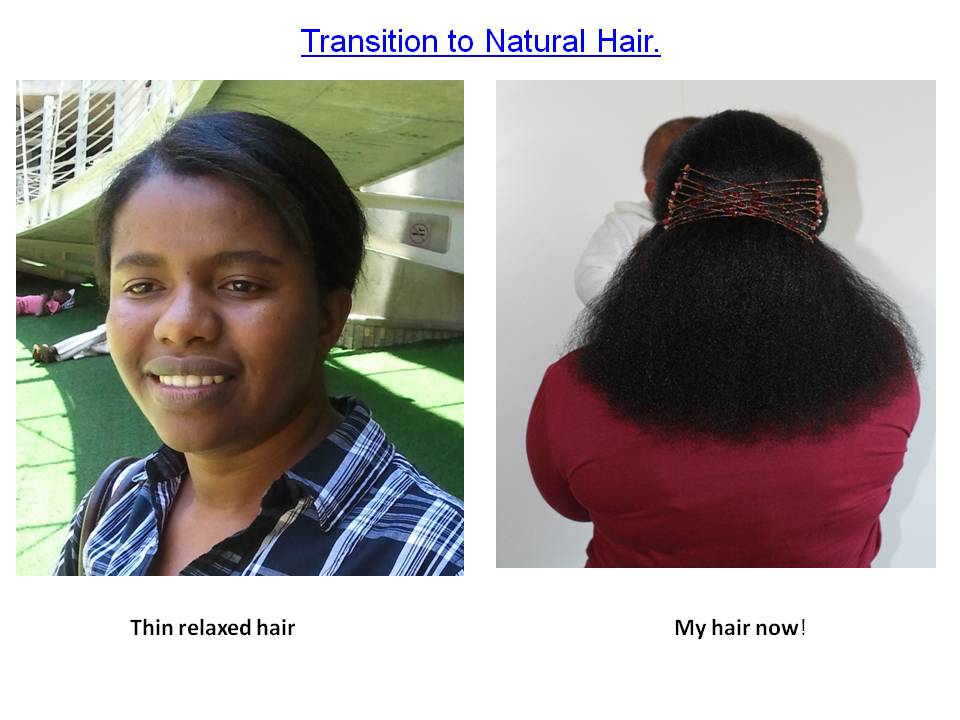
HOW TO TRANSITION TO NATURAL HAIR

Natural Hair
How to Transition to Natural Hair.

So you have decided to wear your hair in its natural state and rid yourself of the relaxers, perms and texturizers but you do not know where to start from and not sure of what you are up against? Transitioning is an option and below are a few tips to get you started.

1.Prepare your mind. I will not lie to you. Transitioning to natural hair is quite a challenge and your mind will have to get on board in order for you to make it. There will be so many people who will discourage you on your decision and you will fight many mind battles. Knowing why you are going natural in the first place and the challenges you may face along the way will help your mind not to go in panic mode when bad hair days come.

2.Deep condition at least once a week and co-wash your hair instead of shampooing it. Use a sulphate free shampoo if you can afford one otherwise use your regular shampoo sparingly. Deep conditioning will reduce breakage and will also keep both textures moist, soft and more manageable.

3.Keep your hair well moisturised at all times by spritzing it with water then sealing it with an oil of your choice every day, even twice a day if you feel your hair is very dry. A good moisturiser you can buy from any shop that sells hair products may help. Unfortunately you will have to try different products sometimes before you find one that agrees with your particular hair.

4.Oil treatments and protein treatments will help you get stronger hair that will not break easily. Do them regularly. Once or twice a month, alternating them helps.

5.Scab hair which tends to be dry may show up first and you might think that is your hair texture. This is only a result of scalp damage because chemicals. Keep deep conditioning and moisturising to realise your true texture which will come with time and may take longer for others.

6.Low manipulation styles should be your go-to styles while transitioning. The point where your relaxed hair joins the natural new growth is the weakest and too much manipulation will result in breakage at this point. Avoid excessive combing and brushing of your hair and tight hairstyles. Try Bantu knot-outs, twist-outs or braid outs. You can also roller set, flexi rod set or straw set your hair or tie it in a loose bun. Whatever you do, keep your hands out of your hair as much as possible.

7.Protective styling is also a way of getting some rest from having to deal with two different textures. Wear a sew-in weave or a wig to hide your hair for a while and to protect it from the harsh weather elements. You can braid or twist your hair with extensions to give your hair some volume because it tends to be very thin at the ends especially from month six into your transition. Twists on my hair without extensions used to look so sickly and unsightly when I was transitioning. With them on my hair, I would usually wear a hat to work or a scarf if I am around the house. Wearing hair extensions helped me not to obsess on my hair that seemed not to grow at all during my first year.

8.Avoid heat at all costs. Flat ironing your new growth to match your relaxed straight hair will do more harm than good. The heat will dry your hair even more and may result in more breakage.

9.Have patience. Transitioning is only a phase. It will soon pass and soon you will be able to wear your hair in its happy healthy kinky state. My transition was two years. It was not easy but it was all worth it. There are times when I thought, why the hack but I am glad I soldiered on.

Indeed it is a journey and all I wish is for you to take a step at a time and make it. Please don’t you ever look back and give up. Only look back to remind yourself why you made that decision to grow natural hair in the first place. When you are feeling ugly, look again in the mirror and just go, “wow, I’m beautiful.” All the best. Be blessed.

by RUTH MAFUPA

FBI issues cyber security warning to Microsoft Explorer 8 users – KCBD NewsChannel 11 Lubbock

FBI issues cyber security warning to Microsoft Explorer 8 users – KCBD NewsChannel 11 Lubbock.